
April 30, 2026
ILS One
ILS operations still rely on slow manual processes. Discover how programmable execution and smart contracts can reduce settlement from weeks to seconds.

In the ILS market, capital can remain locked for weeks after a reinsurer has already authorised its release. Not because of disputes or claims, but because the operational process still depends on emails, spreadsheets, trustees and people being available. In a market with more than USD 100 billion in assets, this is no longer a technology problem. It is an execution problem.
Consider a standard post-coverage situation:
The reinsurer releases the collateral, with the expectation that the investor will receive the funds shortly after. Two weeks later, the investor follows up, as the funds have not yet arrived. Upon review, the cause is operational: a responsible party was unavailable and the process did not progress.
During this time, capital is effectively locked, despite the instruction to release it.
Same process, different execution:
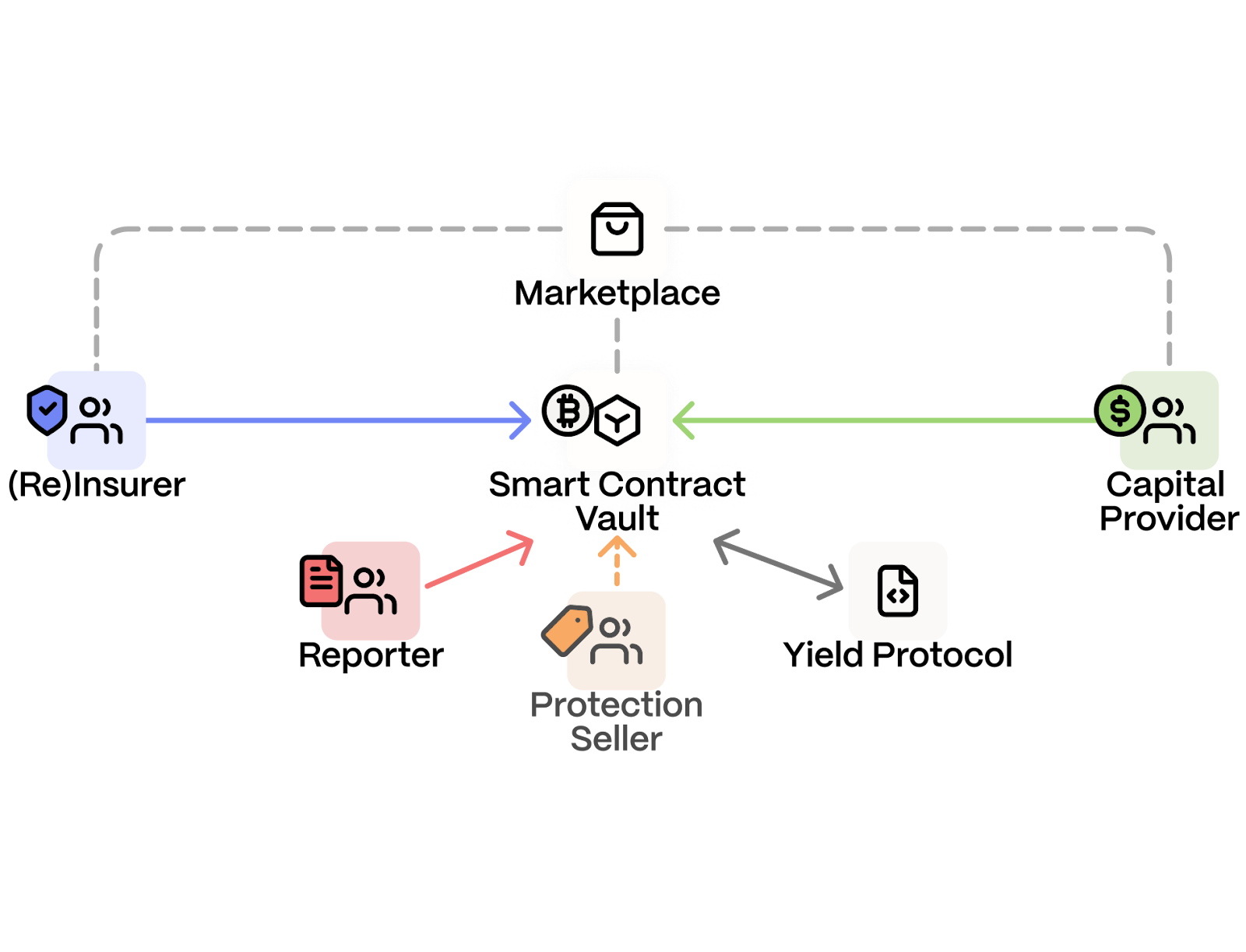
First and foremost, the reinsurer retains full authority over the collateral until its release. However, in the new set-up, this control is no longer operationally dependent on traditional intermediaries. Instead of relying on a trustee or a bank-managed trust account to execute transactions and oversee cash flows, the process is governed by predefined rules. This removes the need for a trusted third party, as execution becomes deterministic and programmatic.
Collateral release conditions can be defined in code and triggered automatically. For example, if a specified date is reached and no new claims have been recorded, a predefined percentage of the collateral can be released. Similarly, payouts during the coverage period can be executed as soon as verifiable conditions, such as validated claims, are met. As a result, settlement no longer depends on manual coordination between multiple parties. Instead, it can be executed instantly or within seconds, depending on the governance framework. While additional controls (e.g. multi-signature approvals or governance sign-offs) may introduce slight delays, the process remains significantly more efficient than traditional setups.
This shift reduces settlement cycles from multiple days (T+3) or weeks to near real-time (T+0) execution. Furthermore, profit and claim-related settlements can occur continuously throughout the coverage period, rather than being limited to annual cycles. This allows capital to be accessed and redeployed dynamically, instead of remaining idle for extended periods.
This execution model is enabled by blockchain technology, used here as an operational infrastructure rather than a cryptocurrency-related application. It provides a platform that acts as a single source of truth. Instead of relying on third parties to manage collateral, collateral handling is governed by predefined rules embedded in smart contracts, which are agreed upon by all participating stakeholders at inception. This allows processes to be executed automatically or include defined approval steps, depending on the structure. The infrastructure is not built per transaction, but once and then reused across multiple deals.
ILS structures themselves remain unchanged. The key change lies in the execution layer through which they are operated.
In ILS, the bottleneck is no longer capital. It is operational execution:
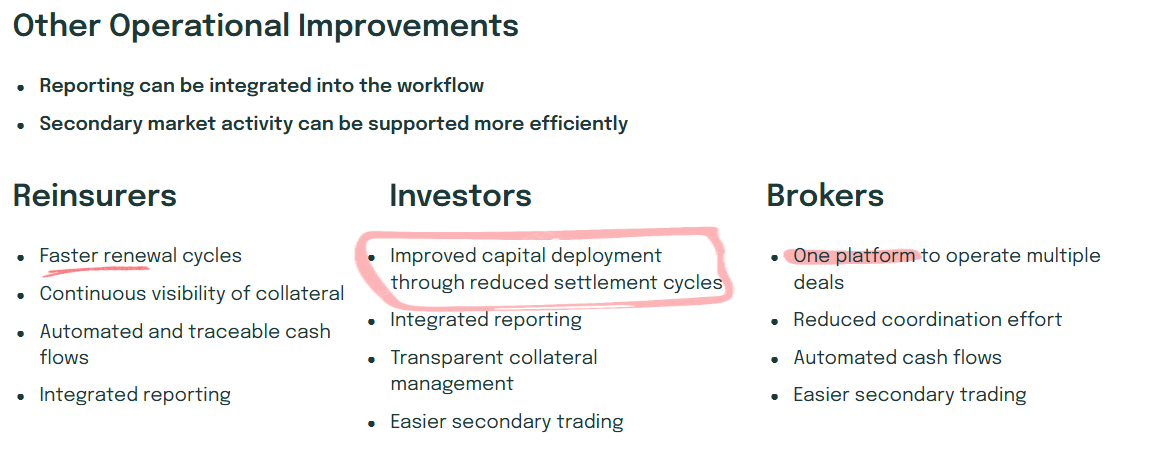
Processes that previously required coordination across multiple parties can be streamlined, automated, or embedded into predefined workflows. This leads to faster execution, improved capital availability, and greater transparency across stakeholders.
At the same time, the approach is designed to scale. Once the underlying structure is in place, it can be reused and adapted with limited incremental effort, making it increasingly efficient as adoption grows.
While traditional models remain relevant today, the direction is clear: as operational demands increase, firms that can release, redeploy and govern collateral in near real time will have a structural advantage over those still relying on manual coordination and legacy trust structures. If you would like to find out more about the execution layer, please contact us or read about our Projects with Schroders Capital and Hannover RE "Tokenising a proportional reinsurance transaction" and "Tokenizing $30’000 insurance-linked-warranty for 50 investors" and our live platform.


