We don’t send newsletters regularly—only when there’s something valuable to share.
Expect insights into digital asset management, the future of investing, decentralized finance, Web3, and blockchain.

We are a

Tech
Creative Tech Agency
with a background in
Asset Management
Stay connected
SubscribeWe are a
Tech

Creative Tech Agency
with a background in
Asset Management
Stay connected
Subscribe




Delivering smart contract–governed collateral, automated cashflows, and real-time transparency across the full reinsurance lifecycle.


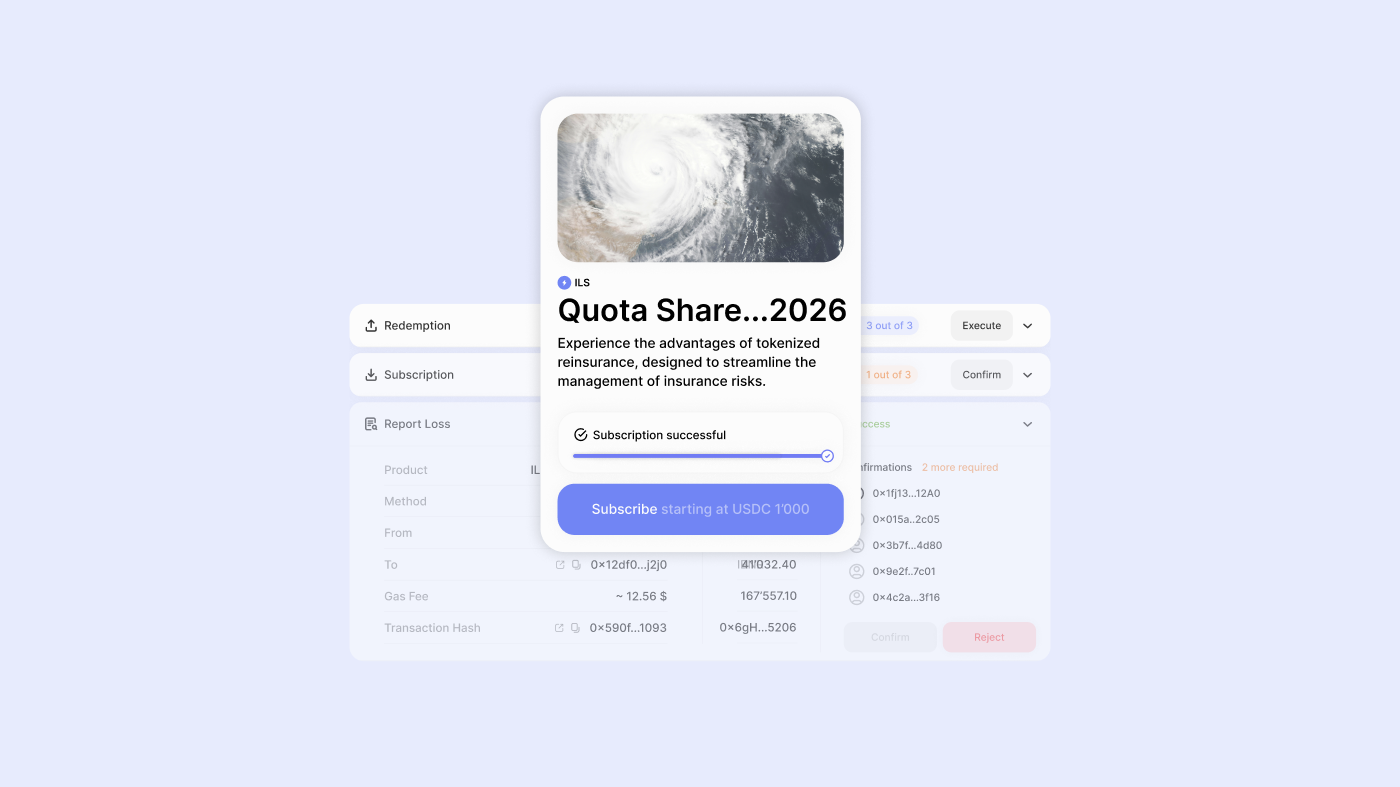
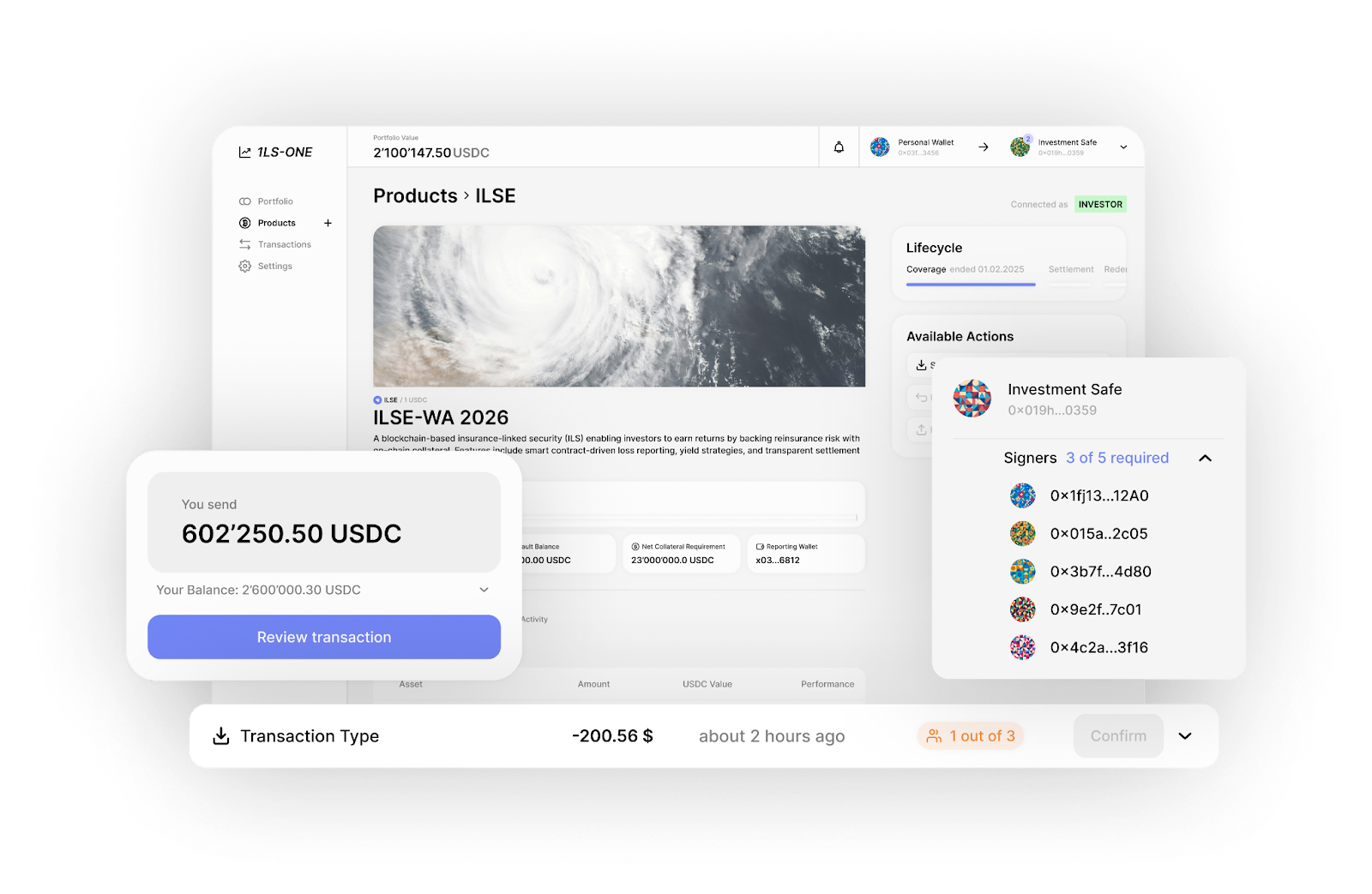
Following our collaboration with Schroders Capital, the private markets specialist within the Schroders Group, and Hannover Re, a leading global reinsurer on a project to tokenize an insurance-linked securities (ILS) transaction, we launched ILS One, a digital platform designed to tokenise ILS and materially enhance operational efficiency.
Through this initiative, the i.AM Innovation Lab successfully enabled a quota share reinsurance agreement to be represented, executed, and settled via smart contracts on a public blockchain. The project demonstrates how core reinsurance structures can be translated into programmable, auditable systems while maintaining institutional governance, security, and control standards.
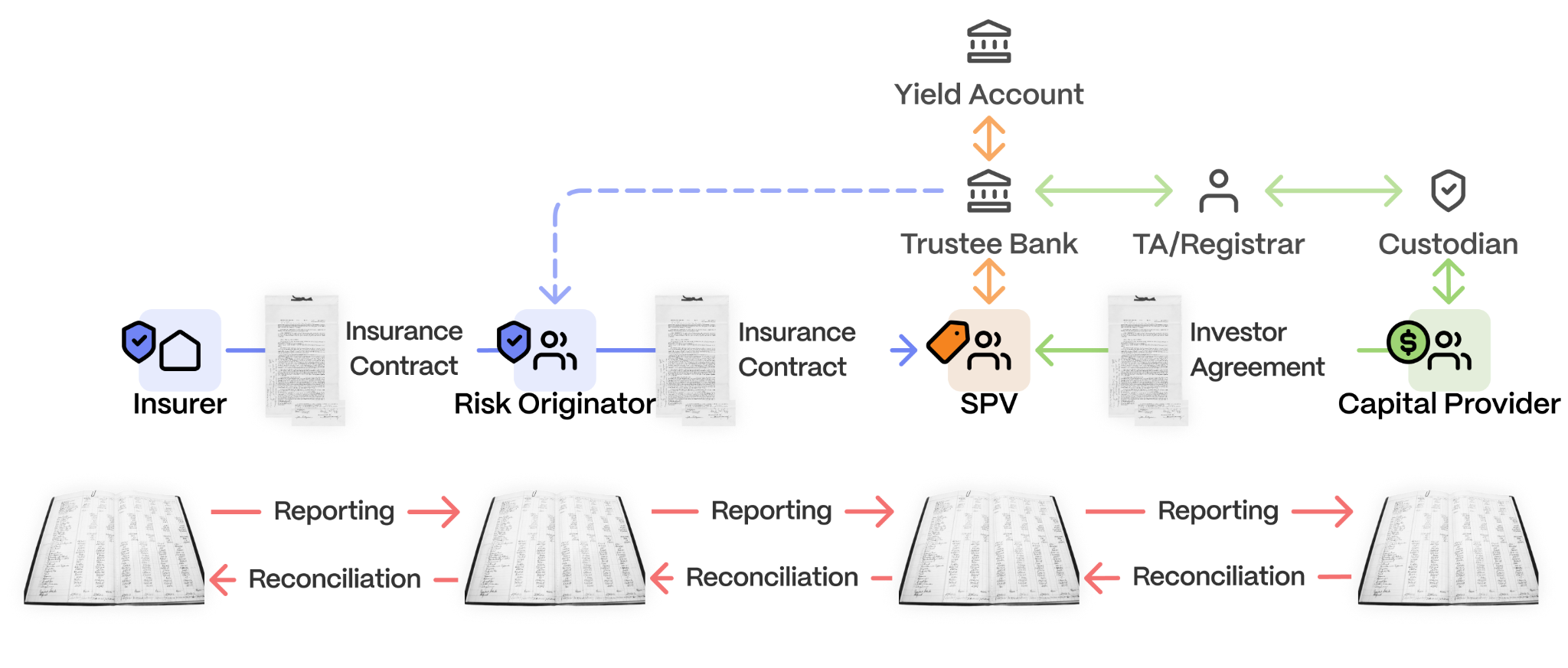
ILS and reinsurance transactions are capital-intensive and operationally complex. Their primary objective is to provide insurers with the capital required to underwrite risk and meet claims arising from insured events, such as property damage. However, the execution model underpinning these transactions remains largely manual and fragmented.
Key structural challenges include:
Transfer agents, custodians, trustees, fund administrators, and brokers must align processes and timelines across multiple organisations.
Critical data such as bordereaux and settlement figures, is reconciled across datasets and email exchanges, increasing operational risk and overhead.
Collateral provided from investment funds is usually trapped for extended periods, reducing capital efficiency.
While the current model functions, each additional transaction increases operational complexity and cost, constraining growth.
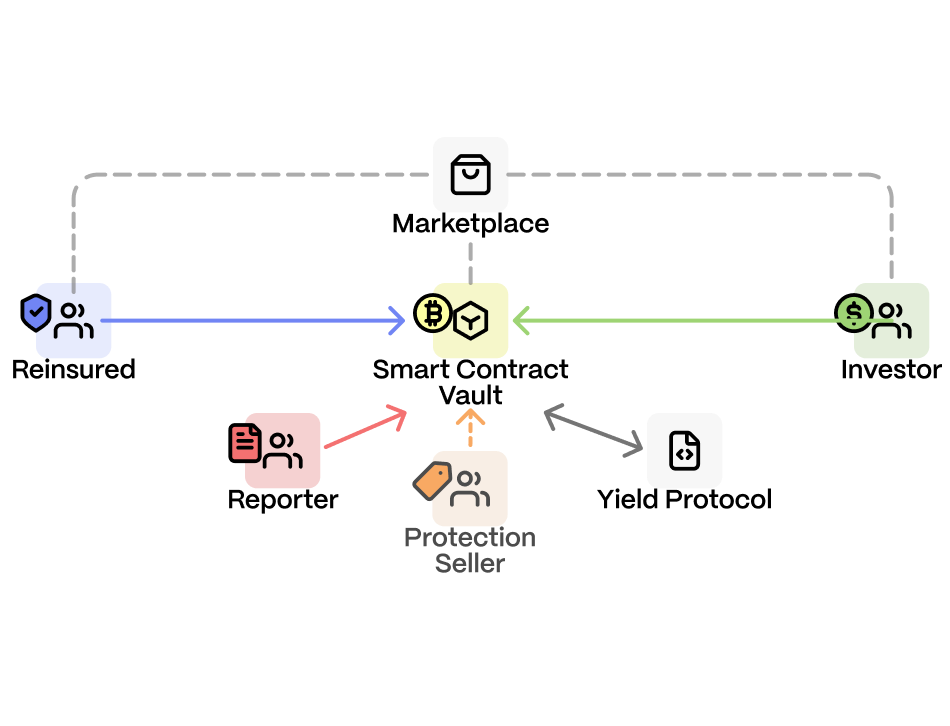
ILS One is a scalable smart-agreement infrastructure that brings both contractual logic and capital flows onto blockchain infrastructure—without requiring participants to interact directly with the underlying technology.
At its core, each quota share transaction is represented by a smart contract that:
A smart contract functions as autonomous software deployed on a public blockchain, accessible only to whitelisted institutional participants. It can securely hold and transfer digital assets — such as USD-denominated stablecoins—and execute transactions automatically based on agreed rules.
By replacing manual coordination across emails, spreadsheets, and intermediaries, the smart contract enforces consistent execution and transparent settlement.
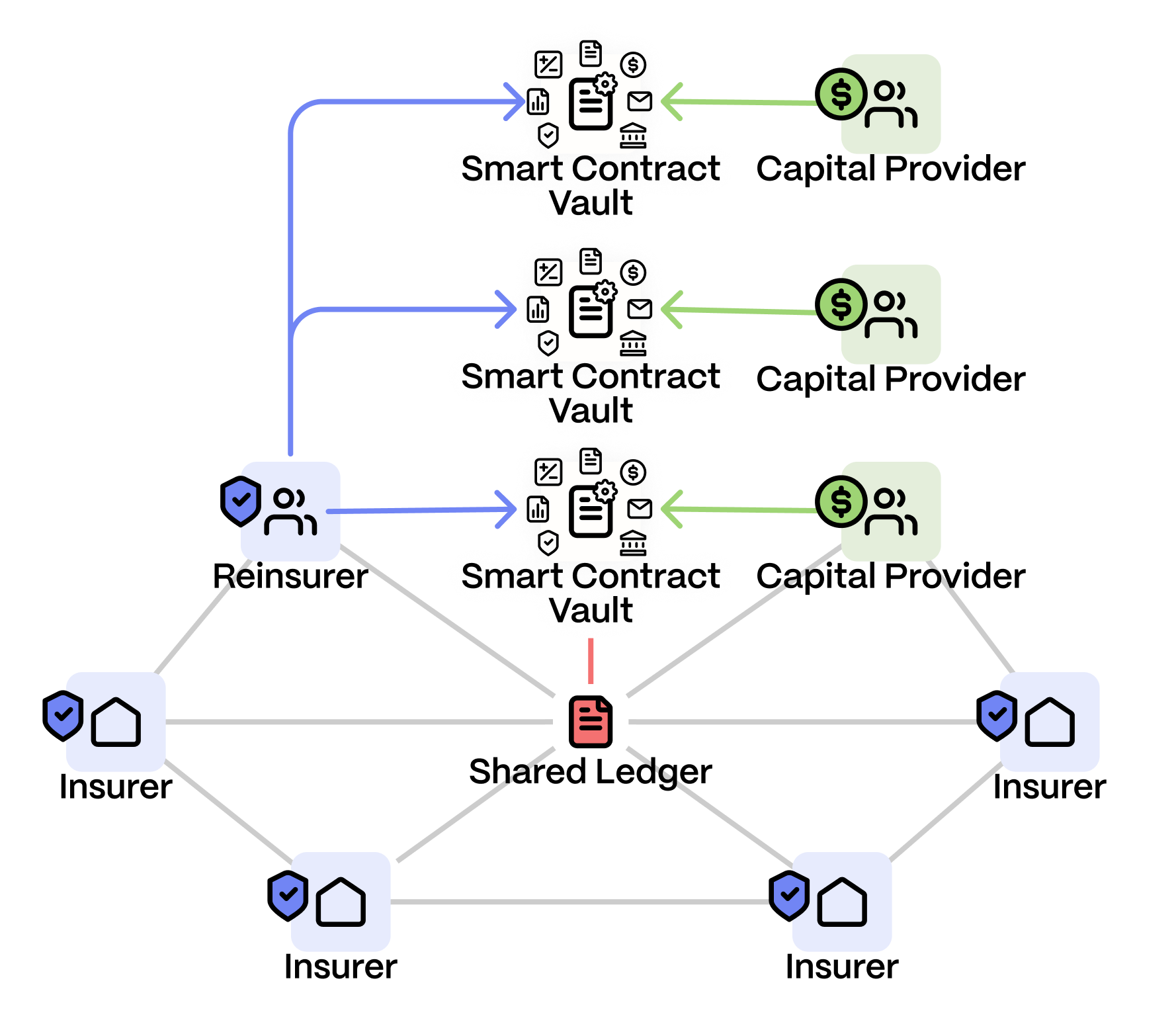
ILS One is designed to scale efficiently. Each new transaction runs on the same execution framework, eliminating incremental operational burden. Increased underwriting volume does not introduce additional complexity; it operates on identical, programmable infrastructure.
Authorised users access ILS One using their corporate credentials. Each user is associated with a wallet address linked to their organisation.
Key operational features include:
Collateral is allocated into a tokenised money market fund investing primarily in investment grade U.S. Treasury instruments. In return, investors receive a token representing their proportional interest in the collateral via an atomic swap mechanism.
During the risk coverage period:
At maturity, token redemption triggers an automated release of funds in accordance with the predefined collateral release schedule.
For capital providers:
For (re)insurers:
Our support of the initiative became the genesis of ILS One and included the following:
A significant portion of the work extended beyond technology. It involved translating established institutional processes into a new execution model and enabling parallel operation alongside existing frameworks.
ILS One does not represent a fully displaced operating model, but a practical bridge between traditional infrastructure and blockchain-based execution.
Retaining selected legacy components was a deliberate design choice to ensure interoperability and institutional adoption. The focus was on evolution rather than disruption, integrating new technology into existing governance, risk, and control frameworks.
The project demonstrates that:
ILS One illustrates how blockchain and smart contracts can modernise structured investment products by enhancing automation, transparency, and capital efficiency.
In partnership with Schroders Capital and Hannover Re, we have demonstrated the feasibility of tokenising reinsurance transactions on a public blockchain under real-world constraints. The platform moves live transactions on-chain today while remaining adaptable for future clients and structures.
ILS One is not a proof of concept, it is a working foundation for the next generation of institutional risk transfer infrastructure.

In today's digital landscape, businesses often struggle with managing data spread across multiple systems and platforms. This was the challenge our client faced—data scattered across Excel sheets, Mailchimp audiences, different Bexio accounts, and various legacy systems, each having isolated contact information. The lack of integration between these systems led to duplicated contacts, inconsistent data, and inefficiencies in operations. Our task was to consolidate these data silos, eliminate duplicates, and build an interactive solution that would improve CRM (Customer Relation Management)and operational efficiency.
The first step in this project was a comprehensive analysis of the client’s existing systems and the data they contained. We conducted an audit of each data source, including Excel lists, Mailchimp, Bexio, and the legacy systems that the client had relied on for years. The goal was to understand the structure of the data, identify inconsistencies, and assess the overall data quality.
The audit revealed significant challenges. Not only were there numerous duplicate contacts across systems, but the data also varied in quality—some records were incomplete, others outdated. Additionally, the lack of integration between these systems meant that the same contact information could differ from one platform to another, leading to mistakes and inefficiencies.

With a clear understanding of the client’s data landscape, we proceeded to consolidate the information. This process involved the careful merging of duplicate contacts across all systems. We developed and implemented algorithms to identify and match duplicates, taking into account variations in name spellings, email addresses, and other contact details.
As we merged the data, we also took steps to improve its overall quality. This involved standardizing address formats, filling in missing information, and removing outdated or irrelevant records. This allowed the final dataset to not only be consolidated but also accurate, up-to-date, and ready for scale.
The next phase of the project was to import the cleaned and consolidated data into Airtable, a flexible database platform known for its user-friendly interface and powerful automation capabilities. Airtable was chosen because it could serve as the backbone of a custom ERP (EnterpriseResource Planning) system tailored to the client’s needs.
In the next phase, we will design and build automatic interfaces in Airtable to connect it with the client’s key systems: the website for managing user profiles and course attendance, Mailchimp for email marketing, and Bexio for invoicing and order management. This integration will transform Airtable into a central hub where all data can be accessed, managed, and updated in real-time across all systems. The result will be an automated flow of data, eliminating the need for manual entry and significantly reducing the risk of errors.
After:


For many traditional financial products, the market potential cannot be reached due to complex processes, which increase cost, decrease liquidity and prevent many investors from including them in their portfolios. Our response: Introducing our innovative decentralized application (DApp) designed to revolutionize a range of (illiquid) financial assets starting with insurance-linked securities. This platform includes all relevant elements starting with a token marketplace, all relevant smart contracts, and a user-friendly web interface, supporting blockchain networks like Ethereum and Polygon.
The business model is simple, with your investment in a raspberry bush, you cover the initial costs as well as the maintenance of the bush for the next 6 years. In return, we give you a share of the profit from the berry sales.
We are proud to have accomplished our mission of significantly improving the accessibility, efficiency, and user-friendliness of complex financial products.

Co-Founder, CPO and COO
pier wallet
"We wanted to be a first mover in our market. We needed a partner to come in and execute. This is exactly what i.AM. did!"

Head of IT & Digitization
Openair Frauenfeld
"i.AM Lab is an innovative and reliable partner. They embrace Web3 and opened doors for us!"

Owner of Swiss premium retailer
Pesko
"The Lab understood our needs and developed a token that fit our festival and helped execute the launch."