
March 19, 2026
Automation
Consolidating fragmented data into a unified Microsoft Fabric architecture, automating budgeting processes with Power Apps, and delivering real-time business insights through Power BI.
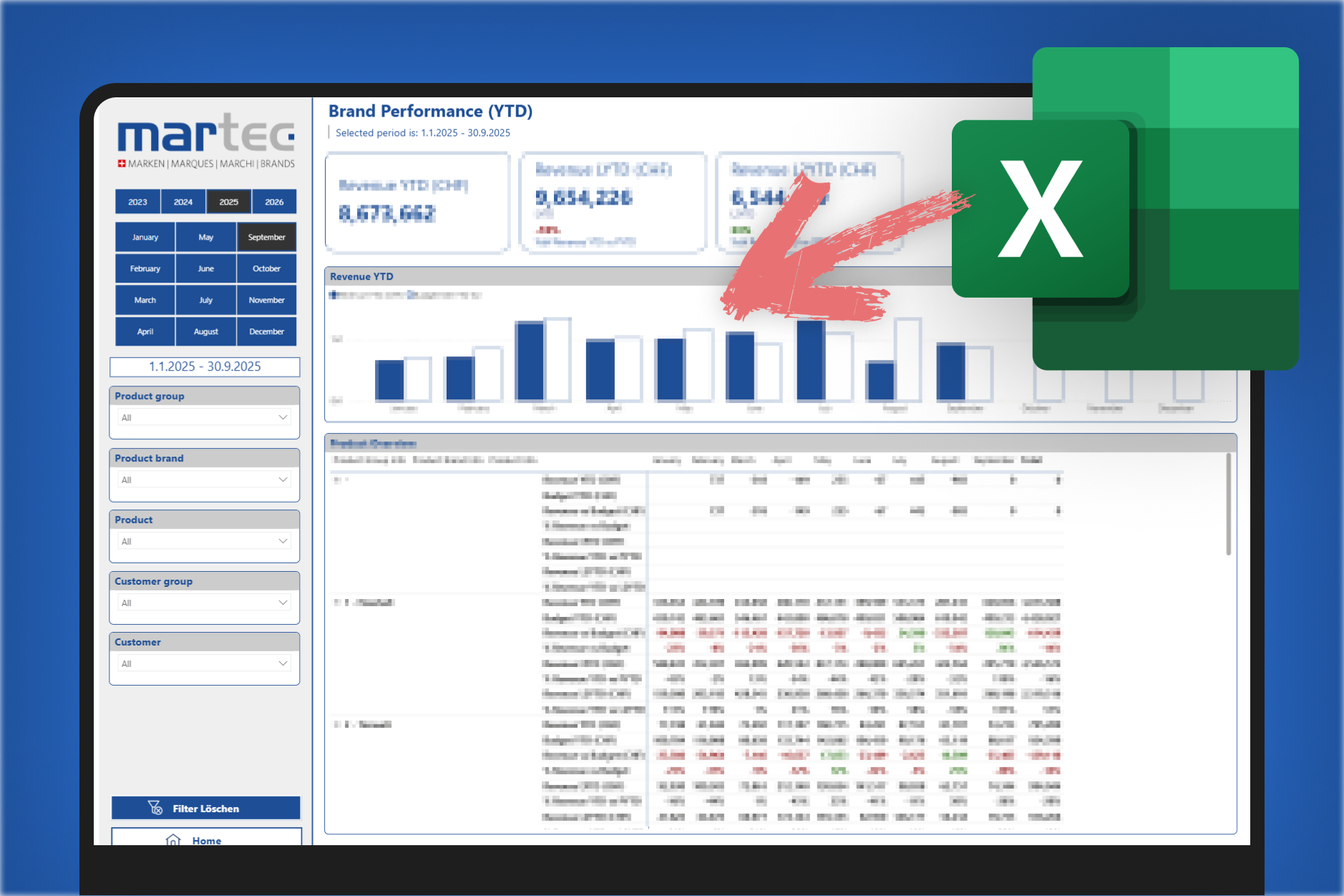
Nearly every company faces the same problem: Single Excel files that are saved in different folders but are needed for the yearly reporting or even monthly updates. And so did Martec Handels AG, a leading Swiss distributor, which faced significant operational bottlenecks due to a fragmented data landscape. Business intelligence was limited, with most reporting relying on manual labor and decentralized Excel sheets. Therefore, the yearly budgeting process was particularly affected. The Key Account Managers had to manage massive, unstable Excel files, manually copying and pasting figures in a time-consuming and error-prone cycle.
The core challenge lay in the lack of integration. Critical business data was unstructured and scattered across numerous local files and the company’s ERP, Abacus, which operated in isolation from other systems, making a holistic view of the business impossible.
We partnered with Martec and qsense to design and implement a scalable, automated IT setup based on the Microsoft Power Platform and Fabric. Our goal was to replace manual work with "live" data flows and provide a central source of truth for marketing, sales, and procurement.
Key pillars of the solution:
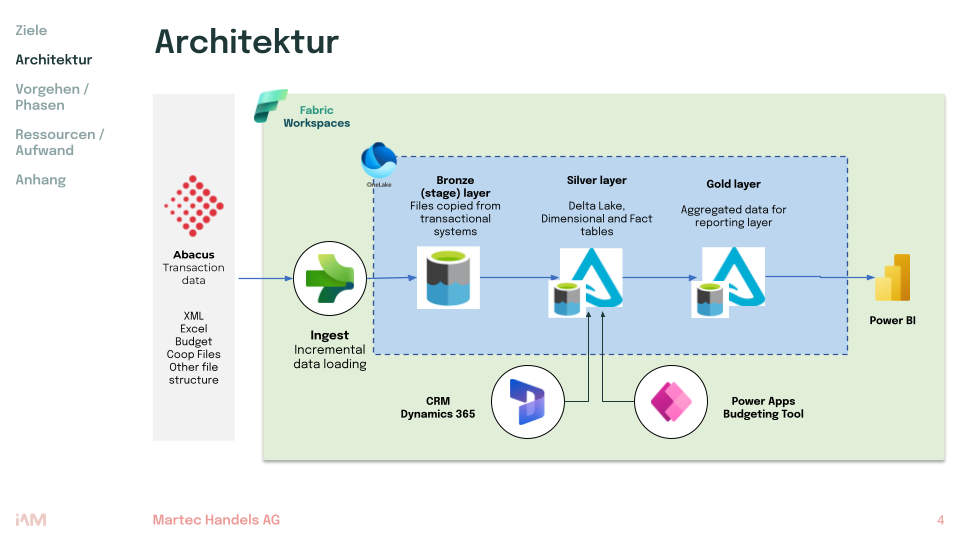
By moving Martec from manual Excel-based processes to an integrated Microsoft ecosystem, we didn't just automate their reporting, we gave them the tools to scale. The new architecture provides a central view of all customer relationships and financial targets, significantly reducing the time spent on administrative tasks and increasing the accuracy of their strategic planning.
Tags: Tech Assessment, Architecture Design, BI Reporting, Data Integration, Data Warehouse
Tech Stack: Microsoft Fabric, Power BI, Power Apps, Dynamics 365.


