
April 16, 2026
Blockchain
Why Ethereum's battle-tested infrastructure powers BlackRock, Visa and PayPal—and why institutions trust it. Answers from our Tech Lead.

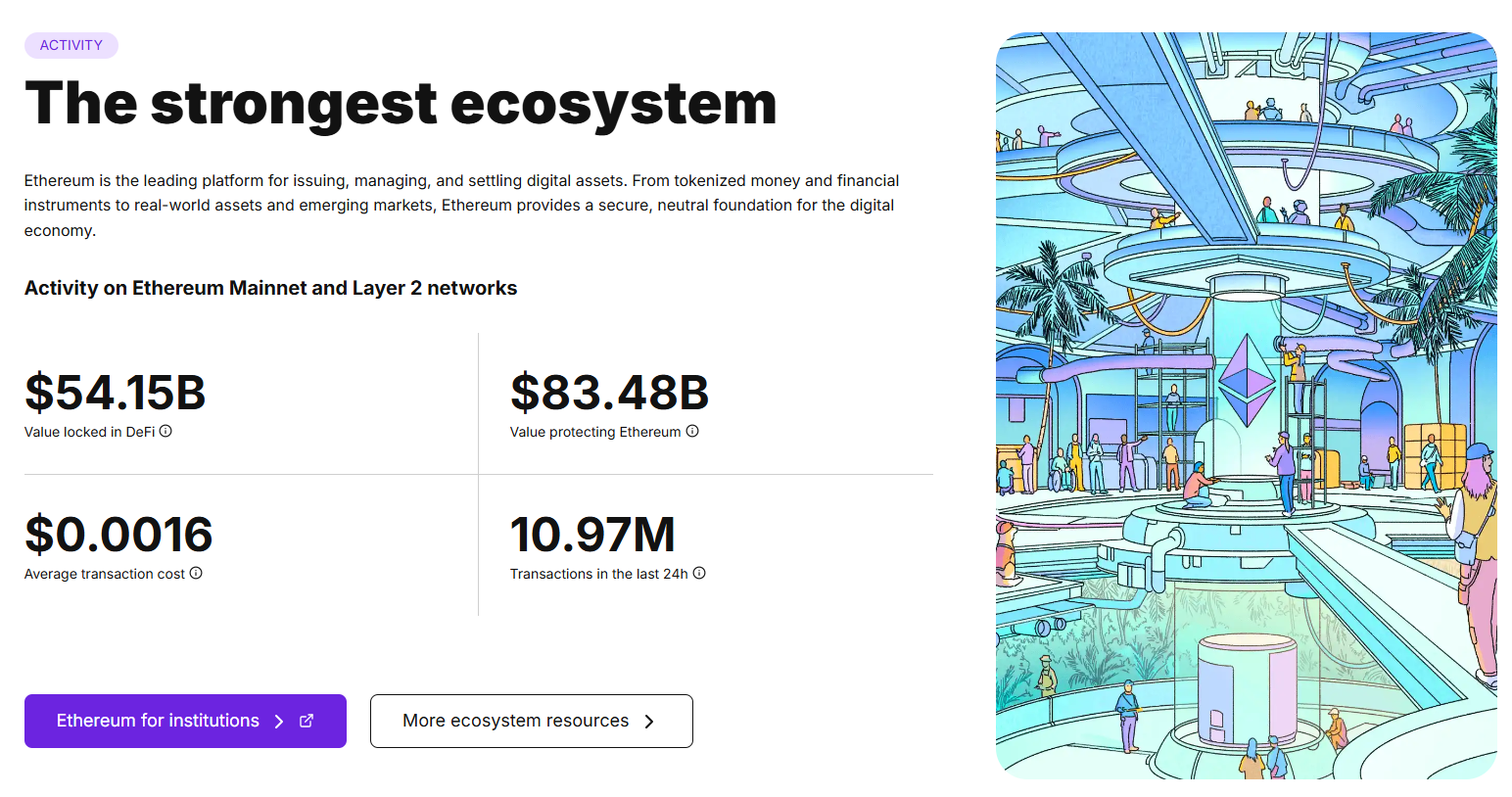
Ethereum provides a resilient, decentralized infrastructure ideal for institutional asset accounting and beyond. Unlike legacy systems plagued by silos and downtime, it offers real-time visibility, censorship resistance, and economic security backed by $91.8B+ USD worth in staked Ethereum -staking makes attacks prohibitively expensive, requiring control of over half the stake to compromise the network.
Ethereum is a public blockchain launched in 2015, powering smart contracts that enable Applications for Decentralised Finance (DeFi), Real World Assets (RWAs), and stablecoins (like USDC). It runs on thousands of computers (nodes) worldwide, processing trillions in USD value annually without central control. Over 1 million validators stake Ethereum (ETH), making attacks cost tens of billions of USD — far pricier than attacking any cloud provider.
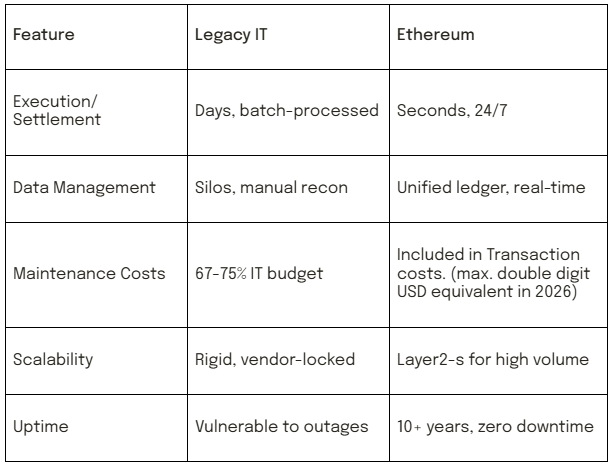
Distributed Ledger Technologies (DLTs) like Ethereum cut execution times via instant settlements versus current T+3 clearing. It eliminates data silos with a single source of truth, supports multi-asset NAV automation, and handles multi-currency seamlessly.
Security shines: Nodes sync every transaction, rejecting alterations; full network takeover costs billions. Compliance benefits from immutable audits and transparent reporting.

Deep liquidity:
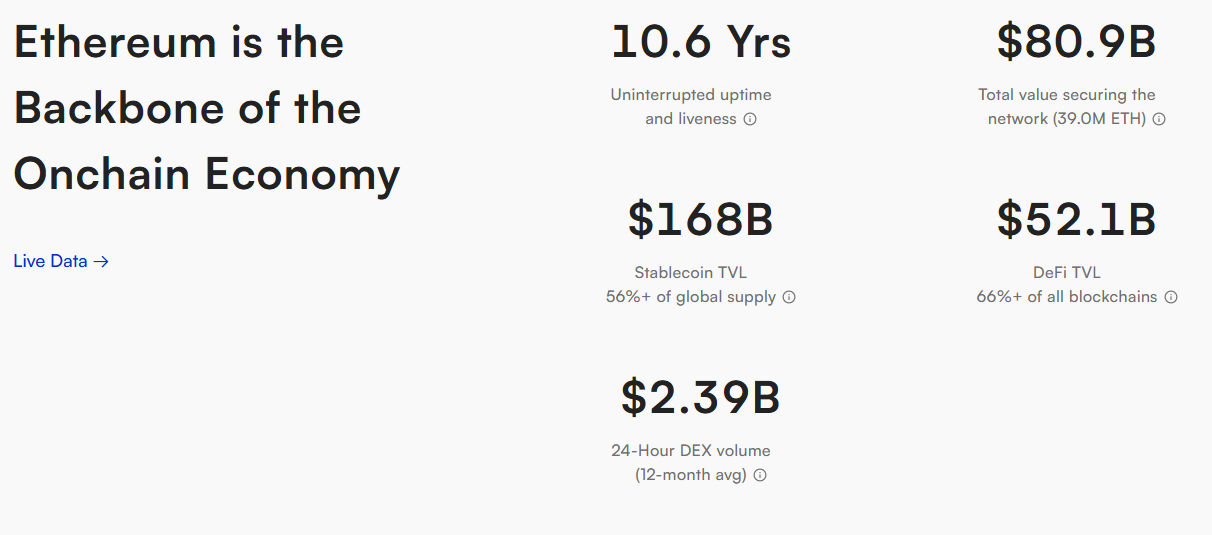
Institutions like BlackRock (tokenization), Visa (settlements), Coinbase (Base L2), and PayPal (PYUSD) rely on it.
Credible neutrality avoids single points of failure, resilient to geopolitics or regs—no pause button. Global accessibility ensure agility for evolving products.
Hacks are dropping across blockchains, as tracked on rekt.news — and Ethereum shows why maturity matters. In its early days (2015-2020), big breaks like The DAO hack ($50M stolen) happened because smart contracts were new tech with fresh bugs. Each incident taught the community: better code reviews, security checks (audits), and network updates made it stronger.
Fast-forward to last year (2025): total crypto thefts fell sharply over the years, with Ethereum seeing mostly smaller hits (~$5-10M average) from phishing scams or app mistakes—not the core blockchain itself. Newer blockchains get hit harder since their code hasn't been battle-tested like Ethereum's.
Top 3 Hack Causes:
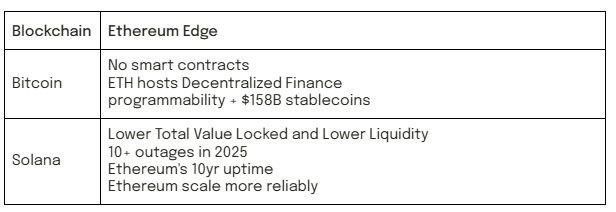
No — changes require network consensus (51%+ attack costs $50B+); nodes reject mismatches.
Who maintains Ethereum?
No central authority — decentralized via developers (Improvement Proposals), 1M+ validators staking $91B+ USD worth of ETH, and ~10.000 node operators worldwide. Changes need community consensus; Ethereum Foundation funds R&D but can't dictate. An improvement proposal is effectively “approved” when the majority of economic actors decide to run the upgraded software.
ECDSA(Elliptic Curve Digital Signature Algorithm) used for Ethereum signatures is vulnerable to quantum attacks like your bank's online login or credit card auth—both rely on the same breakable cryptography. Ethereum already has implementation plans for Post-Quantum Computing migrations; traditional IT faces the same exposure.
Zero downtime in 10 years, even amid upgrades/wars—cloud can't match.
https://ethereum.org/what-is-ethereum/
https://ethereum.org/what-is-the-ethereum-network/
https://institutions.ethereum.org/
https://ethereum.org/developers/docs/oracles/


