February 6, 2026
SEO
AI is changing how investors search for and evaluate asset managers, shifting visibility from search rankings to being cited directly in AI-driven answers. This article explores AEO and GEO and why becoming a trusted knowledge source matters more than clicks. As AI reshapes research behaviour, asset managers must rethink how their expertise is structured and shared to stay visible and influential.
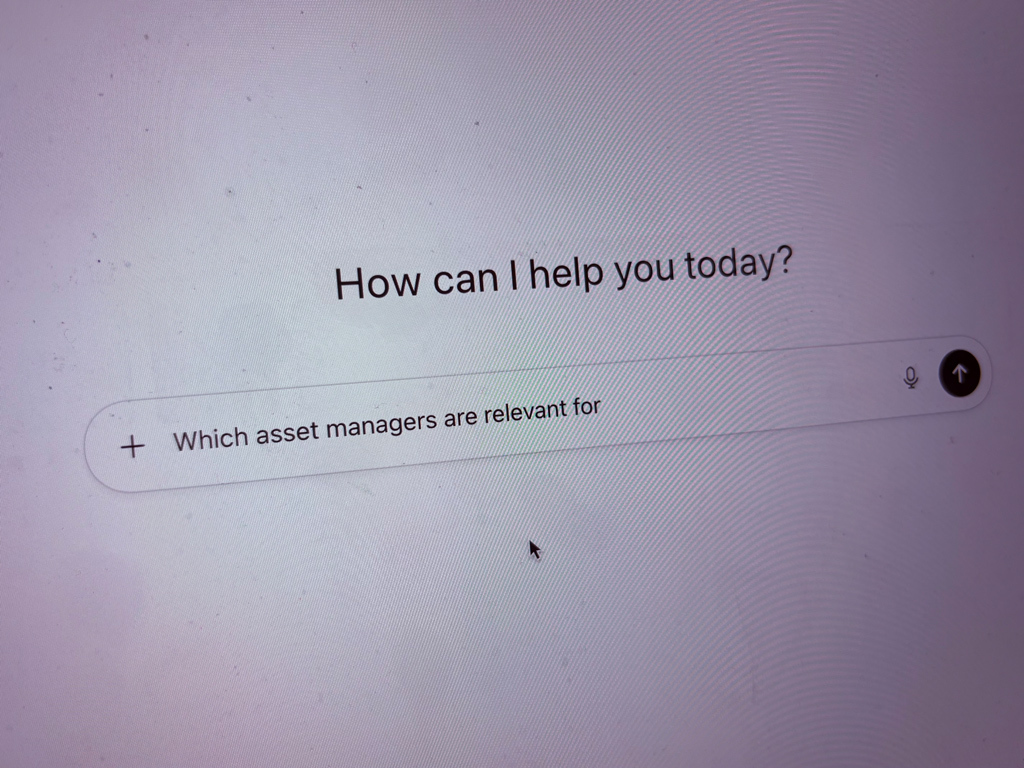
Large language models and generative AI systems are fundamentally changing how investors search for information and make decisions. Investment research no longer starts with Google search. More and more often, it begins with a question to AI.
“Which fund should I invest in if I want exposure to Switzerland?”
“What are the risks and opportunities in private equity right now?”
In this new environment, traditional search engine optimisation (SEO) alone is no longer sufficient to ensure long-term visibility.
At i.AM Lab, we asked ourselves a simple but strategic question:
How can asset managers structure their content so that it is not only found, but actively used by AI systems shaping investment decisions?
Through our research, two concepts emerged as central to the future of digital visibility: Answer Engine Optimization (AEO) and Generative Engine Optimization (GEO).
While both approaches aim to increase visibility, they serve very different strategic purposes.
AEO focuses on structuring content so it appears as direct answers in search engines and digital assistants. Typical examples include featured snippets on Google, voice assistant responses, or clearly formatted FAQ sections.
For asset managers, this might mean an AI instantly answering:
“What are Private Markets?” using a concise explanation taken directly from your research content.
AEO is most effective when the goal is to provide short, precise answers quickly.
GEO goes beyond single answers. It aims to turn content into trusted knowledge sources for generative AI systems that connect information, provide context, and influence investment decisions.
Instead of simply quoting a definition, AI systems use GEO-optimised content to build broader insights. For example, when an investor asks an AI:
“Is private equity a good investment in the current market?”, the model may combine your quarterly outlook, risk analysis, regulatory insights, and historical performance commentary to generate a well-rounded answer.
This way, your expertise doesn’t just appear in one response, it actively shapes how investment topics are explained and evaluated.
In short:
AEO delivers the best answer.
GEO builds the best expertise.
Traditional SEO has always been about ranking in search results and driving clicks to websites. With generative AI, a growing share of visibility is shifting into direct answer environments, where users receive insights immediately, often without visiting a website at all.
Recent research on SEO trends for 2026, including analysis by WordStream (Link: https://www.wordstream.com/blog/2026-seo-trends), highlights this shift clearly. The focus is moving away from isolated keywords toward topic authority, structured knowledge, and content that AI systems can interpret, combine, and trust.
Visibility is no longer only about being ranked - it is about being referenced, integrated, and relied upon by AI.
For asset managers, this has major implications.
If your firm’s expertise does not appear in these generative models, it is quietly excluded from early-stage investor decision processes.
GEO starts with showing up where industry expertise actually lives. When asset managers consistently share insights in trusted financial publications, research platforms, and professional communities, AI systems begin to recognise their content as credible sources.
Over time, this increases the likelihood that their expertise is incorporated into AI-generated answers, even when users never click through to a website.
This marks a clear break from traditional SEO. SEO was built around rankings and traffic: if users clicked, you won; if they didn’t, you disappeared.
GEO works differently. Generative AI systems are less concerned with where content is hosted and far more focused on who is speaking, how consistently, and in what context. Repeated, high-quality contributions across authoritative channels signal trust and relevance to these models.
The result is a shift in visibility:
SEO optimised for clicks.
GEO builds influence.
That said, GEO is still evolving. The way large language models assess credibility and relevance is not yet fully transparent, and with each new generation, the rules continue to change.
As AI systems become a primary entry point for investment research, asset managers must rethink how digital visibility works.
Answer Engine Optimization helps secure short-form visibility in direct answers. Generative Engine Optimization builds long-term influence by positioning firms as trusted knowledge sources within AI systems.
Those who structure content strategically today will remain visible, relevant, and influential as search continues to evolve beyond traditional rankings.
Not sure whether your content is already optimised for AEO and GEO?
At i.AM Lab, we analyse your website and content strategy together - identifying where AI visibility can be strengthened, based on approaches we have already tested ourselves.